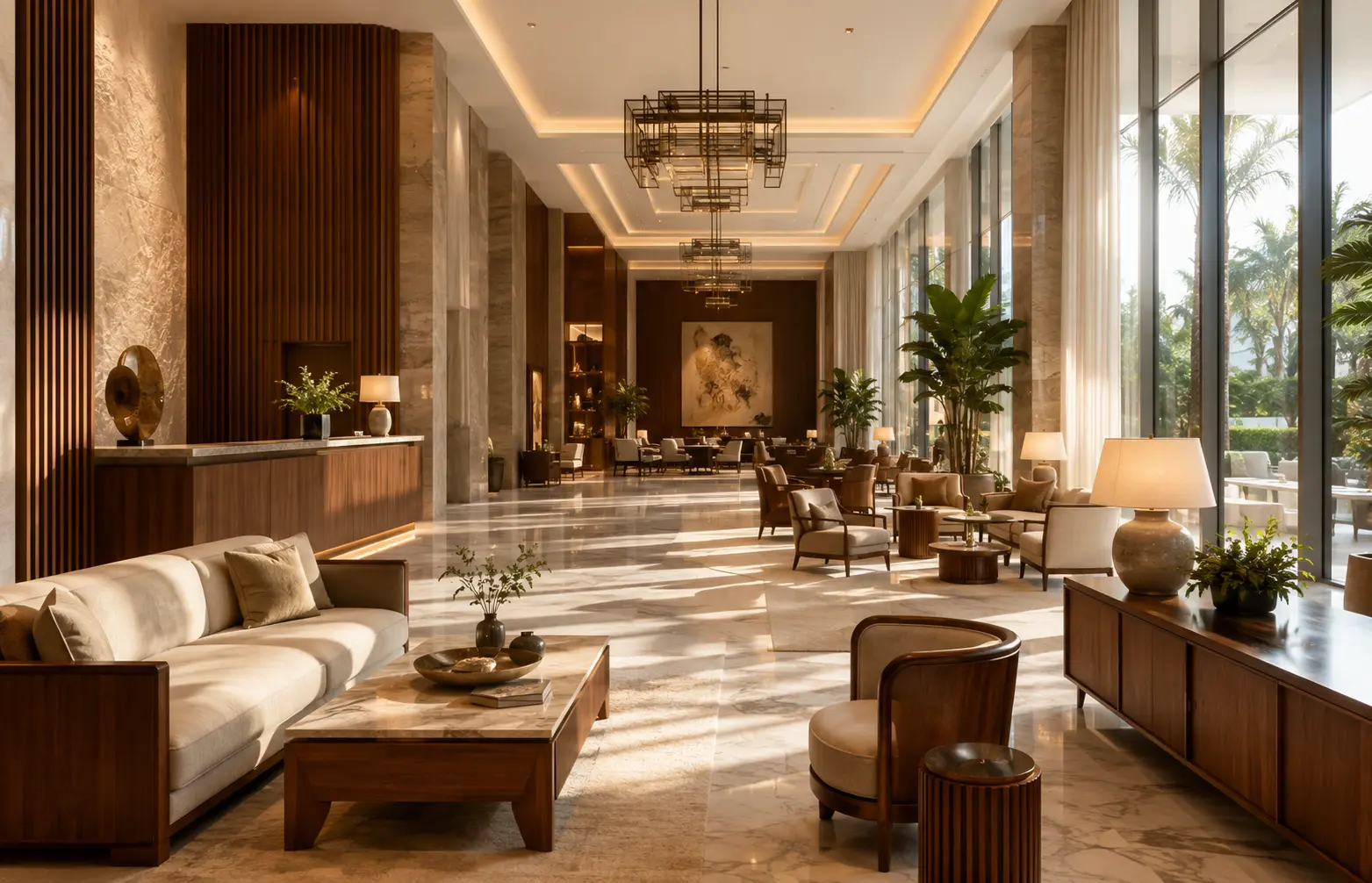

An expert guide for hotel owners, interior designers, architects, and procurement teams on selecting luxury furniture that balances guest comfort, commercial durability, spatial engineering, and brand identity.

Introduction: The Strategic Importance of Hotel Furniture
In the competitive world of modern hospitality, every physical touchpoint contributes to a guest’s perception of luxury, comfort, and service excellence. Among these elements, hotel furniture stands as one of the most vital investments a hotel developer or owner can make. Far more than mere functional decor, luxury hotel furniture shapes the visual identity of a property, dictates ergonomic guest comfort, and plays a direct role in driving guest satisfaction scores and repeat bookings.
When selecting hospitality furniture, hotel owners, architects, and interior designers face a complex balance. The furniture must exude refined aesthetic elegance while enduring the continuous wear and tear of high-traffic commercial environments. Whether furnishing boutique guest rooms, expansive reception lobbies, fine dining restaurants, or outdoor resort decks, choosing the right pieces requires careful planning, deep material knowledge, and partnership with an experienced hotel furniture manufacturer.
This comprehensive guide explores everything hospitality professionals need to know about choosing, specifying, and procuring custom hotel furniture that elevates guest experiences while maximizing long-term commercial ROI.
Why Hotel Furniture Matters
1. Guest Experience & Ergonomic Comfort
A hotel guest’s journey is physically mediated by furniture. From sinking into a plush lounge sofa upon check-in to working comfortably at an executive guest suite desk or experiencing a restorative night’s sleep on a beautifully framed bed, furniture directly influences physical well-being. Inferior seating ergonomics or flimsy joinery immediately compromise a guest’s stay.
2. Architectural & Brand Identity
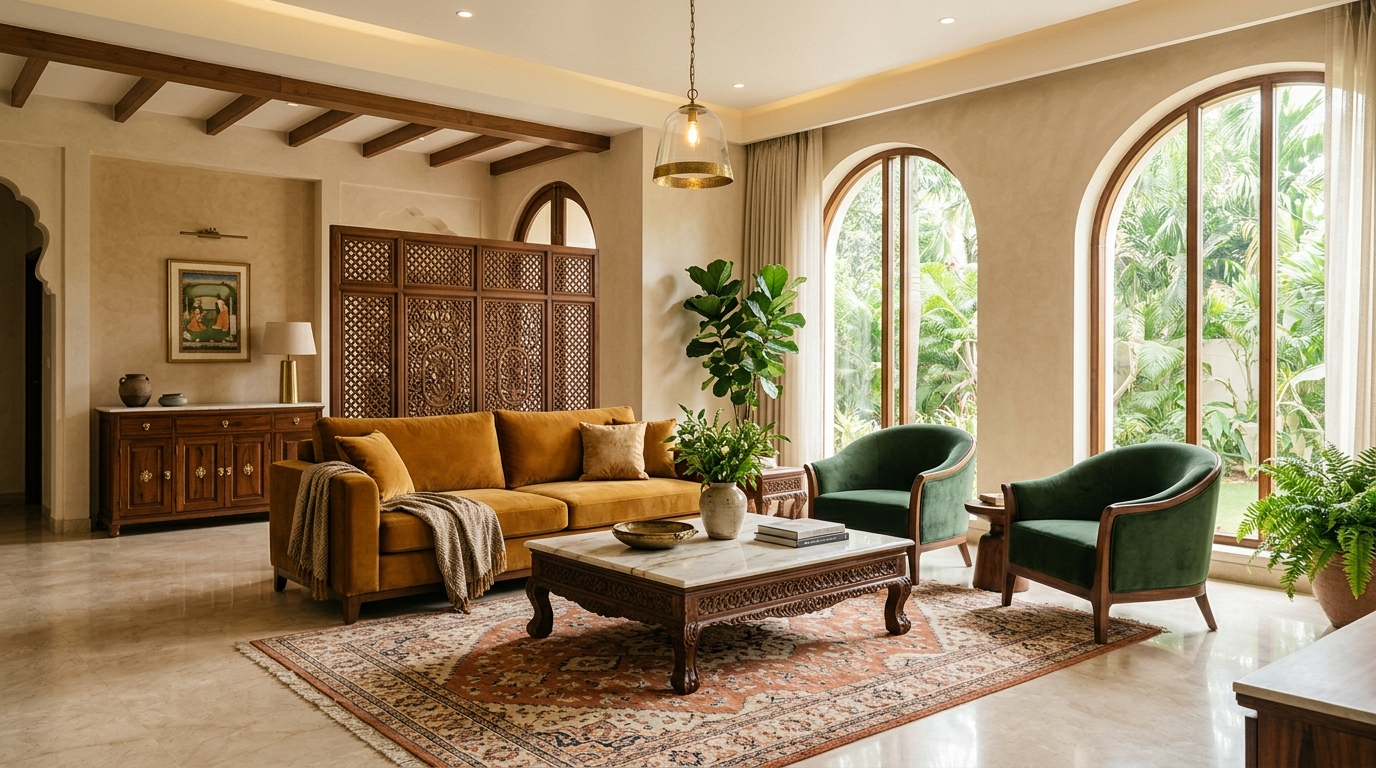
Furniture is the visual anchor of interior architecture. A historic heritage hotel demands rich, dark timber tones and classic craftsmanship, whereas an urban luxury hotel benefits from sleek, modern silhouettes with brushed metallic details. Consistently designed hotel interior furniture communicates a cohesive narrative that distinguishes a property.
3. Commercial Durability & Structural Integrity
Unlike residential pieces, hotel furniture experiences relentless daily operational demands. Luggage impacts, heavy luggage drops, spillages, and intensive housekeeping cleaning schedules require commercial-grade structural integrity. High-density hardwoods and reinforced joinery maintain their finish over years of heavy usage.
4. Maintenance Efficiency & Housekeeping
Operational efficiency depends on thoughtful furniture design. Elevated bed frames with adequate floor clearance simplify vacuuming; stain-resistant commercial fabrics allow rapid spot cleaning; and rounded corners on suite credenzas reduce accidental collisions for housekeepers and guests alike.
5. Maximising Long-Term Asset Value & ROI
While lower-grade commercial furniture may reduce initial capital expenditure, frequent repairs, early surface degradation, and premature replacements inflate lifetime operational costs. Investing in superior wooden hotel furniture crafted by established artisans secures higher asset longevity, preserving property value and reducing lifetime lifecycle costs.
Types of Hotel Furniture
Hospitality properties require specialized furniture categories tailored to distinct guest zones. Understanding the unique requirements of each area is essential for effective procurement.
Hotel Room Furniture
Guest Suites
The guest suite is the heart of any hotel property—a private sanctuary where comfort and privacy are paramount. Key pieces include:
- Beds & Headboards: Solid hardwood bed frames paired with upholstered or hand-woven cane headboards create a commanding visual focal point.
- Bedside Tables: Integrated nightstands with concealed wire management, soft-close drawers, and integrated power outlets.
- Wardrobes & Luggage Racks: Built-in wardrobes with solid wood hanging rails, safe compartments, and integrated luggage benches.
- Desks & Task Seating: Ergonomic writing desks crafted from dense timbers like Teak or Sheesham for business travellers.
- Lounge Armchairs & Vanity Sets: Elegant accent armchairs and vanity dressing tables that offer multi-functional relaxation zones.


Hotel Lobby Furniture
The hotel lobby creates the crucial first impression. Lobby furniture must balance grand aesthetic impact with versatile seating arrangements:
- Reception Desks: Custom-built architectural reception counters featuring natural timber grains, marble tops, and brass accents.
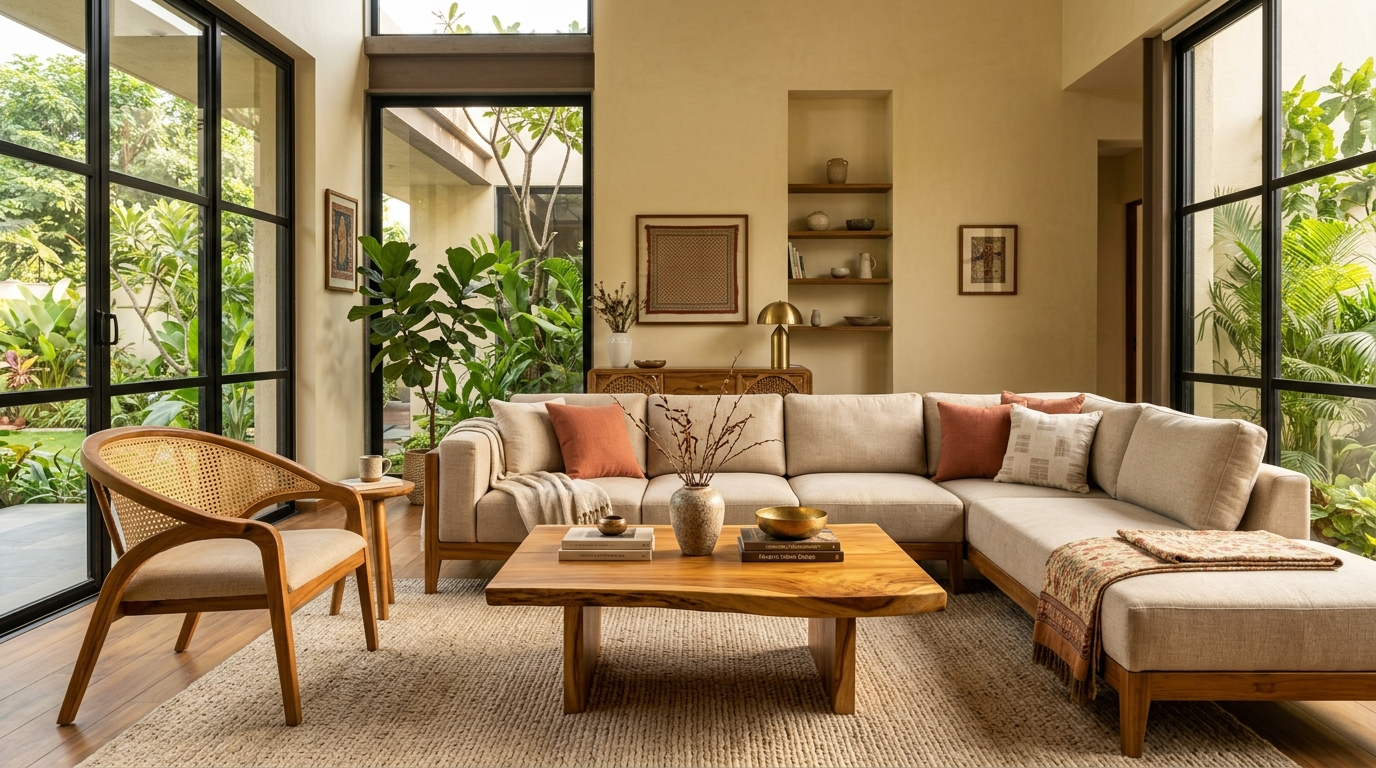
- Lounge Sofas: Deep, high-resilience upholstered sofas configured to facilitate conversation and provide welcoming waiting zones.
- Coffee Tables: Heavy-set solid wood coffee tables and accent side tables serving as structural anchors in expansive spaces.
- Accent Seating & Benches: Statement lounge chairs with distinctive silhouettes defining smaller seating nooks.
Hotel Restaurant and Dining Furniture
Hospitality dining venues require high-density seating solutions designed for intense culinary service environments:
- Dining Tables: Custom solid wood dining tables treated with heat-resistant and liquid-impermeable commercial lacquers.
- Dining Armchairs: Ergonomically contoured dining chairs featuring stain-resistant commercial upholstery.
- Banquette Seating: Custom built-in banquettes optimizing floor space while offering luxurious, enclosed dining nooks.
- Bar Stools: High-stature bar stools with reinforced footrests and supportive backs for hotel lounge bars.

Hotel Outdoor Furniture
Poolside & Resort Decks
Resort decks, rooftop lounges, and alfresco dining areas demand weather-resistant furniture capable of enduring UV exposure, humidity, and rainfall:
Poolside Loungers & DaybedsSolid Teak and synthetic cane sun loungers with quick-dry foam cushions for resort decks.
Patio Dining SetsWeather-treated wooden dining tables with rust-proof stainless steel or aluminum hardware.
Resort Cabana SectionalsDeep-seater outdoor lounge sectionals designed for luxury resort terraces and beach clubs.
How to Choose the Right Hotel Furniture
Selecting the ideal furniture pieces for a hospitality development requires a structured evaluation of nine key parameters:
1. Design & Aesthetics
Ensure all furniture reflects property mood boards, maintaining visual harmony through complementary timber finishes and hardware.
2. Ergonomic Comfort
Prioritize comfortable seating depths, lumbar support, and tactile upholstery textures tested on physical prototypes.
3. Material Quality
Specify dense hardwoods like Teak, Sheesham, or Mango wood. Ensure metals are powder-coated against oxidation.
4. Commercial Durability
Verify joinery uses reinforced corner blocks, dowels, and mortise-and-tenon joints with certified abrasion rub ratings.
5. Space & Dimensions
Analyze circulation pathways. Ensure furniture scale fits room proportions without blocking light sources.
6. Maintenance Ease
Select wood finishes and fabrics that resist staining, scratching, and moisture, allowing easy cleaning by housekeeping.
7. Smart Functionality
Incorporate wireless charging pads into nightstands, soft-close drawers, and flip-top desk access panels.
8. Customisation Capability
Choose a manufacturer capable of tailoring dimensions, timber stains, and detailing to match custom CAD plans.
9. Long-Term Value & ROI
Evaluate total cost of ownership rather than initial purchase price. Superior craftsmanship reduces ongoing replacement cycles.
Best Materials for Hotel Furniture
The choice of raw materials defines both the aesthetic charm and long-term durability of hospitality furniture. Below is a comprehensive specification breakdown:
| Material | Durability Rating | Aesthetic Profile | Optimal Hotel Usage | Maintenance Need |
|---|---|---|---|---|
| Teak Wood (Tectona grandis) | Exceptional (Resistance to moisture, insects, and warping) | Warm golden-brown tone with dense, elegant grain patterns | Luxury guest room beds, executive writing desks, outdoor resort lounge sets | Minimal; periodic conditioning with natural oils or protective lacquer |
| Sheesham Wood (Indian Rosewood) | High structural density and heavy load-bearing strength | Rich, contrasting grain figure with deep chestnut to golden undertones | Statement dining tables, grand lobby reception desks, guest wardrobes | Regular dusting and application of high-grade wood wax polish |
| Mango Wood | Moderate to High; resilient when kiln-dried and sealed | Distinctive figure featuring rich grain variation and subtle spalting | Bespoke restaurant tables, credenzas, decorative accent coffee tables | Wipe with damp cloth; keep away from direct standing moisture |
| Cane & Rattan | High flexibility with strong tension resistance | Organic, tactile texture offering coastal, tropical, or mid-century elegance | Bed headboard weaves, accent lounge chairs, alfresco dining backs | Keep dry and occasionally dust with a soft brush or vacuum attachment |
| Architectural Metalwork (Brass & Steel) | Maximum structural rigidity and impact resistance | Sleek modern lines, brushed brass accents, matte black frames | Lobby sofa frames, luggage rack bases, bar stool support structures | Simple wipe down with microfibre cloth; anti-fingerprint coatings applied |
| High-Performance Upholstery Fabrics | Commercial grade (50,000+ Martindale rub count test rating) | Velvets, bouclés, textured linens, and supple top-grain leathers | Hotel lobby sofas, restaurant banquette seating, suite armchairs | Stain-resistant treatments (e.g. Teflon/nanotech) allow simple spill cleanup |
Custom Hotel Furniture for Hospitality Projects
While standardized off-the-shelf furniture may suit small boutique projects, large-scale luxury developments almost always require custom hotel furniture. Partnering with a dedicated contract manufacturer offers significant advantages:
Optimal Spatial Efficiency
Custom furniture is built to exact room measurements, turning architectural alcoves into functional storage or seating zones.
Uncompromising Brand Alignment
Every detail—from custom timber stains to signature brass handles—is crafted to reflect hotel brand guidelines.
Complete Interior Consistency
Custom production guarantees uniform finish colors and wood grain alignment across hundreds of guest suites.
Integrated Technology & Features
Bespoke pieces allow seamless embedding of wireless charging pads, ambient LED strips, and concealed mini-bars.
Hotel Furniture: Ready-Made vs Custom Furniture
The decision between ready-made catalog furniture and custom contract furniture shapes both project timelines and long-term guest satisfaction. The comparison below highlights key metrics:
| Evaluation Criteria | Ready-Made Furniture | Custom Hotel Furniture | Recommended Choice |
|---|---|---|---|
| Design Flexibility | Limited to standard catalog designs, fixed proportions, and predetermined finishes. | Unlimited creative freedom to align with bespoke architectural concepts and brand identity. | Custom Furniture |
| Dimensions & Scale | Standard residential sizes that may create awkward spatial gaps or restrict circulation. | Precision-engineered to exact millimetre room dimensions and architectural layouts. | Custom Furniture |
| Customisation & Finishes | Restricted to stock timber stains and default commercial upholstery options. | Bespoke timber selection (Teak, Sheesham, Mango), custom stains, and stain-resistant fabrics. | Custom Furniture |
| Lead Time | Faster initial dispatch (2–4 weeks) if inventory is pre-stocked in distribution warehouses. | Requires structured manufacturing cycles (6–12 weeks) tailored to project timelines. | Ready-Made (Short Term) |
| Interiors Consistency | Risk of batch variations in finish, grain pattern, and dye lots across large orders. | Guaranteed batch consistency across guest suites, public lobbies, and dining outlets. | Custom Furniture |
| Project Suitability | Suitable for rapid pop-up spaces or budget boutique guest rooms with standardized plans. | Essential for luxury hotels, heritage resorts, high-traffic lobbies, and custom villas. | Custom Furniture |
| Cost Considerations | Lower upfront capital expenditure per unit, but higher long-term replacement frequency. | Higher initial investment offset by commercial-grade durability and superior ROI. | Custom Furniture (Long Term) |
How to Plan Furniture for a Hotel Project (10-Step Process)
A structured procurement plan prevents costly delays, ensures design fidelity, and streamlines on-site installation. Follow this 10-step process for successful hospitality furniture planning:1. Define the Interior Design Concept & Brand Identity
Establish the overarching architectural aesthetic, guest demographic preferences, and brand story. Determine whether the property aligns with modern minimalism, classic heritage luxury, or coastal resort elegance.
2. Conduct Spatial Audits & Precise Measurement
Review architectural drawings and perform on-site dimensional verification. Establish essential clearance zones for guest movement, housekeeping carts, and egress requirements.
3. Identify Full Inventory Requirements by Zone
Compile a comprehensive Bill of Quantities (BOQ) detailing every piece needed across guest rooms, corridors, reception lobbies, dining halls, bars, and outdoor pool decks.
4. Select Materials, Timbers, & Upholstery Standards
Determine timber species (such as solid Teak, Sheesham, or Mango wood), metal finishes, and upholstery performance requirements (Martindale rub counts, fire retardancy standards like BS 5852).
5. Finalise Detailed Shop Drawings & Technical Specifications
Collaborate with the hotel furniture manufacturer to produce detailed 2D/3D shop drawings showing exact joinery techniques, internal framing, and hardware integration.
6. Review Physical Mock-Up Samples & Prototypes
Commission full-scale prototype pieces or a complete mock-up guest suite. Test ergonomics, drawer slide action, seating firmness, and finish texture under actual hotel lighting.
7. Confirm Commercial Specifications & Production Schedules
Lock down final pricing, payment milestones, quality assurance metrics, and batch delivery schedules aligned with the hotel construction or renovation timeline.
8. Monitor Kiln-Drying, Crafting, & Assembly Cycles
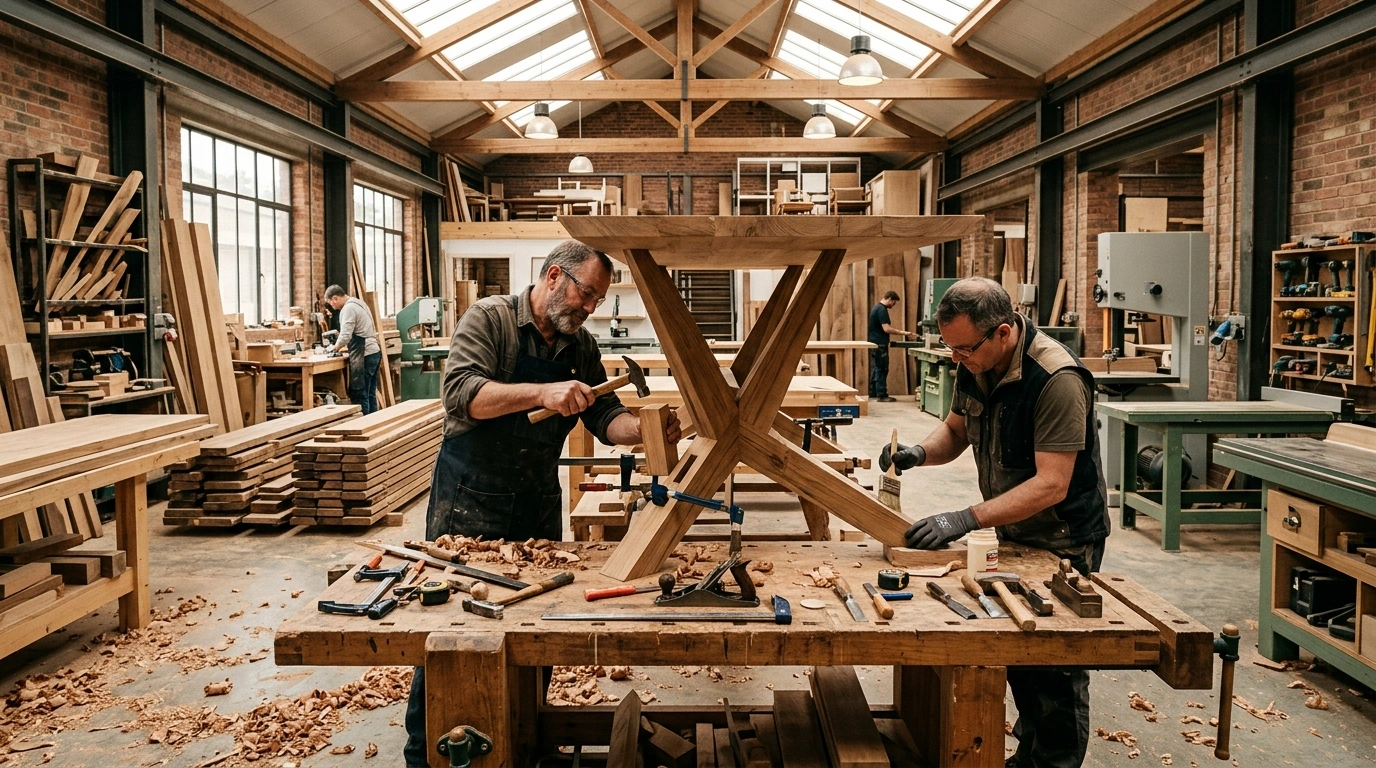
Ensure raw timber undergoes precise kiln-drying to maintain moisture content between 8% and 12%. Supervise precision joinery, hand sanding, multi-stage lacquering, and upholstery.
9. Conduct Rigorous Pre-Shipment Quality Inspections
Inspect finished pieces for dimensional accuracy, finish consistency, structural stability, hardware functionality, and protective packaging integrity.
10. Coordinate Delivery, On-Site Logistics, & Installation
Organise white-glove transport, staged room-by-room unboxing, professional assembly, placement verification, and final handover to hotel management.
Why Choose a Professional Hotel Furniture Manufacturer?
Selecting the right manufacturing partner is the single most critical decision in hospitality procurement. A specialized hotel furniture manufacturer brings technical expertise, large-scale production capacity, and strict quality control to your project. When evaluating potential partners, assess:
Artisan Craftsmanship & Kiln-Drying
Verify deep expertise in solid wood crafting and proper timber seasoning (kiln-drying to 8–12% moisture content) to prevent warping in climate-controlled hotel rooms.
Technical CAD Engineering
Ensure in-house draughtsmen can convert architectural mood boards into detailed 2D/3D shop drawings showing exact joinery and hardware integrations.
Multi-Stage Quality Audits
Confirm that rigorous inspections take place across raw timber grading, joinery assembly, multi-coat lacquering, and protective export packaging.
White-Glove Freight Logistics
Partner with manufacturers offering room-by-room unboxing, professional assembly, and final handover to hotel management on schedule.
Frequently Asked Questions (FAQs)
Commercial hotel furniture is engineered to withstand continuous, high-volume daily usage, stringent fire safety regulations (such as BS 5852 or CAL 117), and frequent cleaning cycles. Unlike residential furniture, hotel furniture utilizes reinforced commercial joinery (mortise-and-tenon, corner blocks), high-density foams, commercial-grade upholstery fabrics (50,000+ Martindale rub count rating), and protective commercial wood lacquers that resist moisture, scratches, and chemical cleansers.
Custom hotel furniture enables property developers and interior designers to optimize spatial efficiency, guarantee seamless brand identity, and achieve precise dimensional harmony. Bespoke furniture accommodates unique room layouts, conceals electrical conduits and hospitality technology, ensures batch finish consistency across hundreds of suites, and delivers superior long-term ROI through tailored commercial durability.
Teak wood, Sheesham wood (Indian Rosewood), and Mango wood are among the finest timber choices for luxury hospitality furniture. Teak offers unmatched moisture resistance and dimensional stability for high-use suites and outdoor resorts. Sheesham provides exceptional density and deep, dramatic grain figures ideal for executive writing desks and grand dining tables. Kiln-dried Mango wood provides beautiful grain character and sustainable versatility for accent tables and hospitality credenzas.
The lead time for custom hotel furniture typically ranges from 6 to 12 weeks, depending on order volume, design complexity, timber conditioning, and prototype sign-off schedules. This timeframe accounts for precise engineering shop drawings, kiln-drying timber to optimum moisture content (8–12%), artisan hand-crafting, multi-stage lacquering, commercial upholstery, quality control audits, and scheduled freight logistics.
Hotel owners and procurement teams should partner with established furniture manufacturers who provide certified compliance documentation. Ensure upholstery fabrics meet commercial fire-retardant standards (such as BS 5852 Crib 5 or CAL 117), foams carry anti-microbial and fire-resistant certifications, and timber is harvested from responsibly managed plantation forests with low-VOC finishing coats to protect indoor air quality.
Blog
Get fresh home inspiration and helpful tips from our interior designers