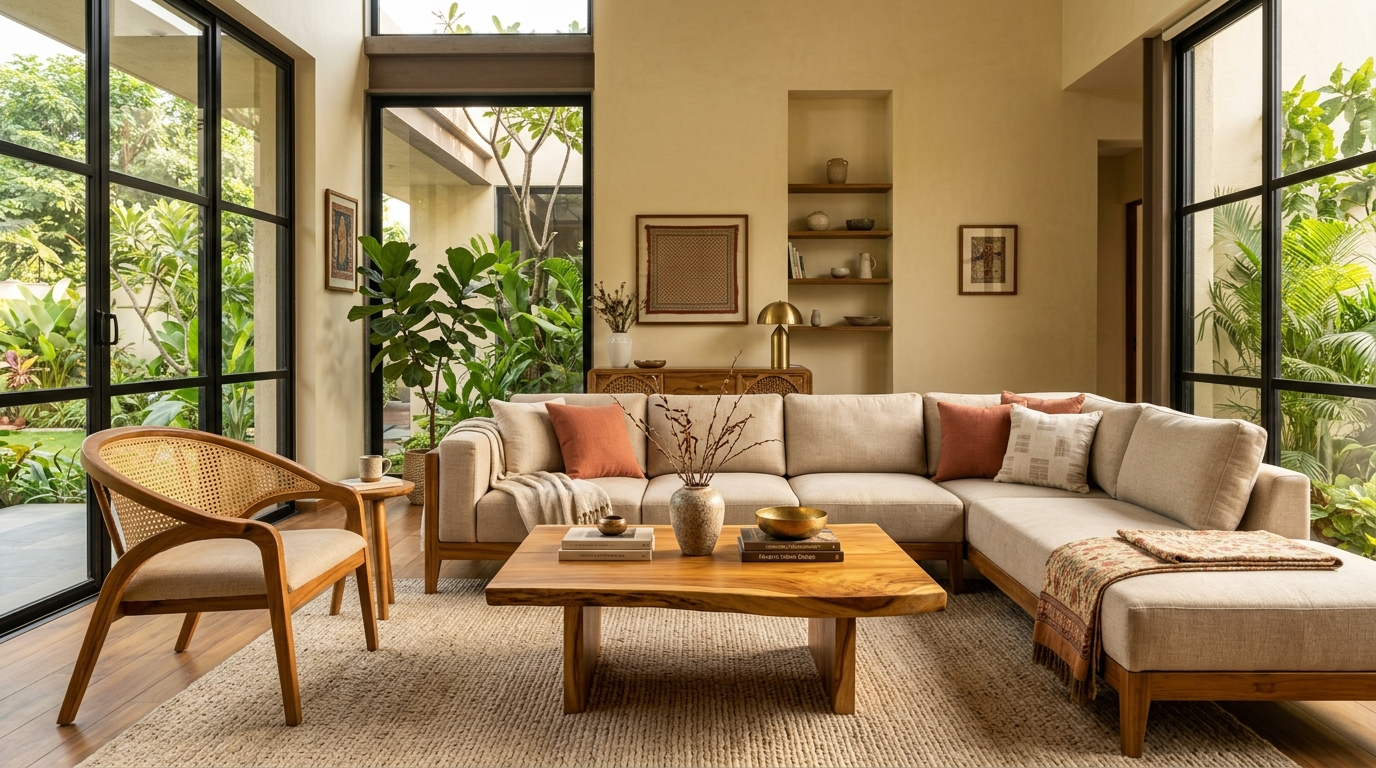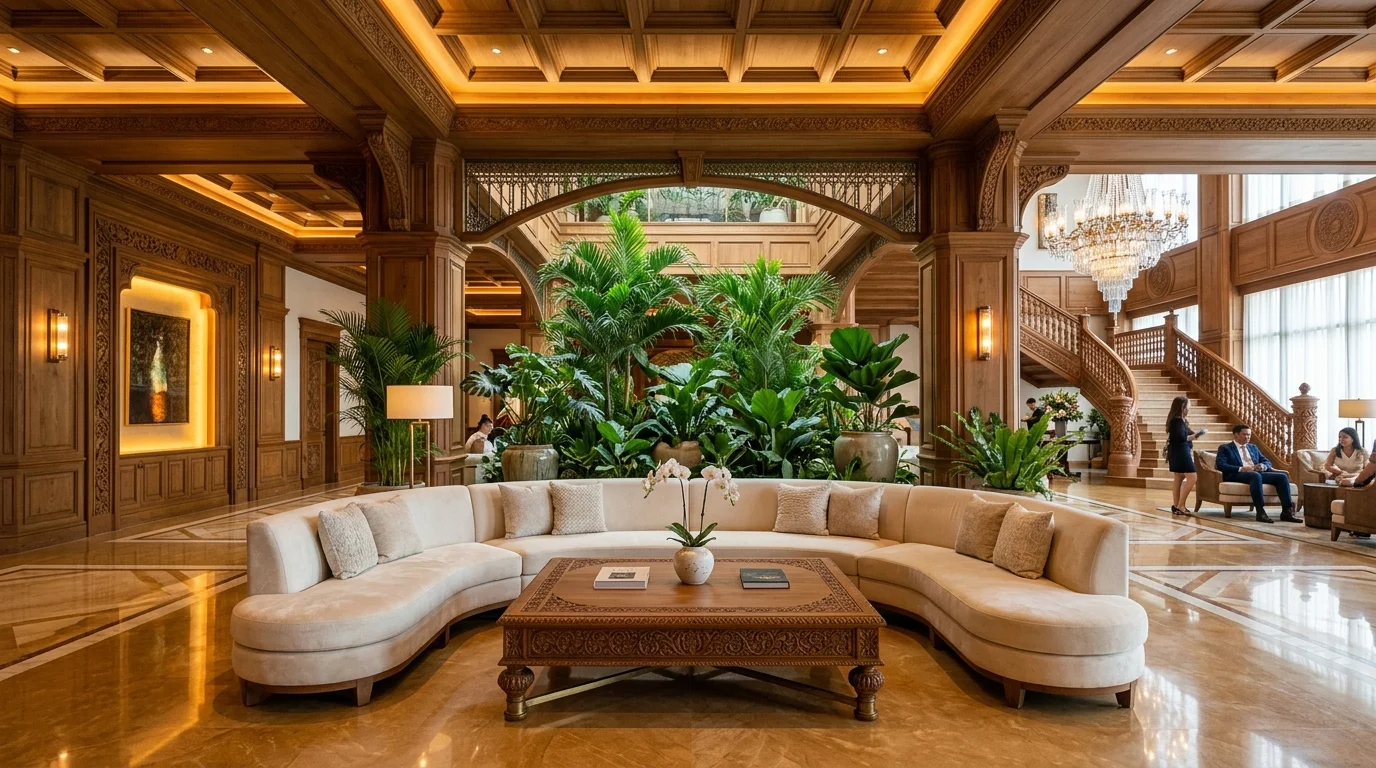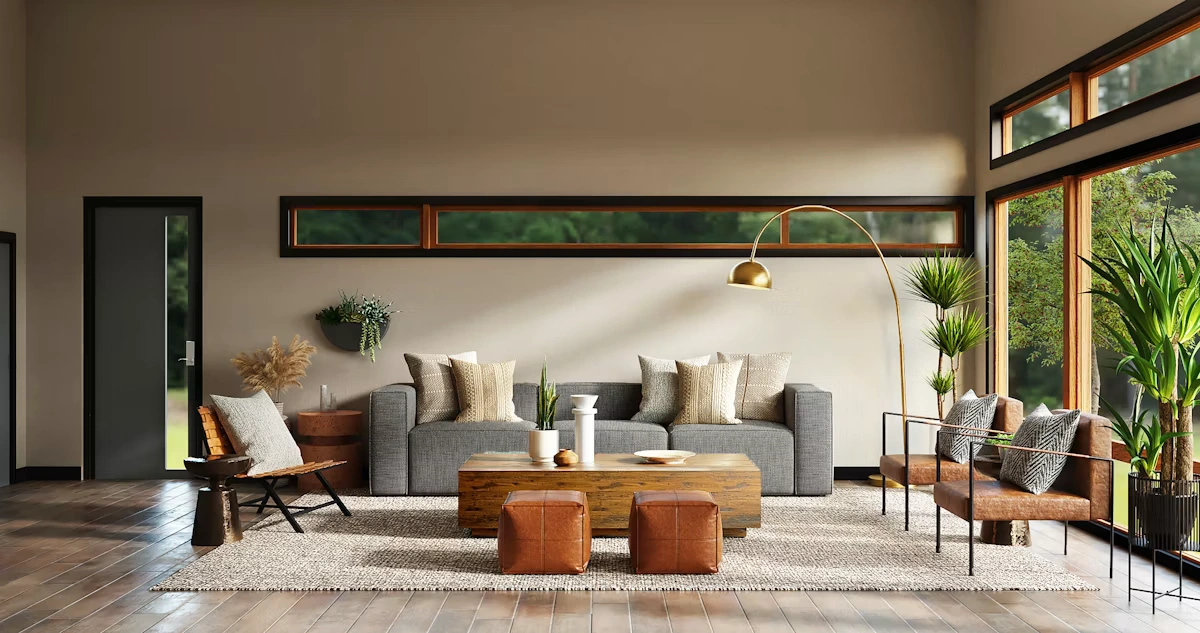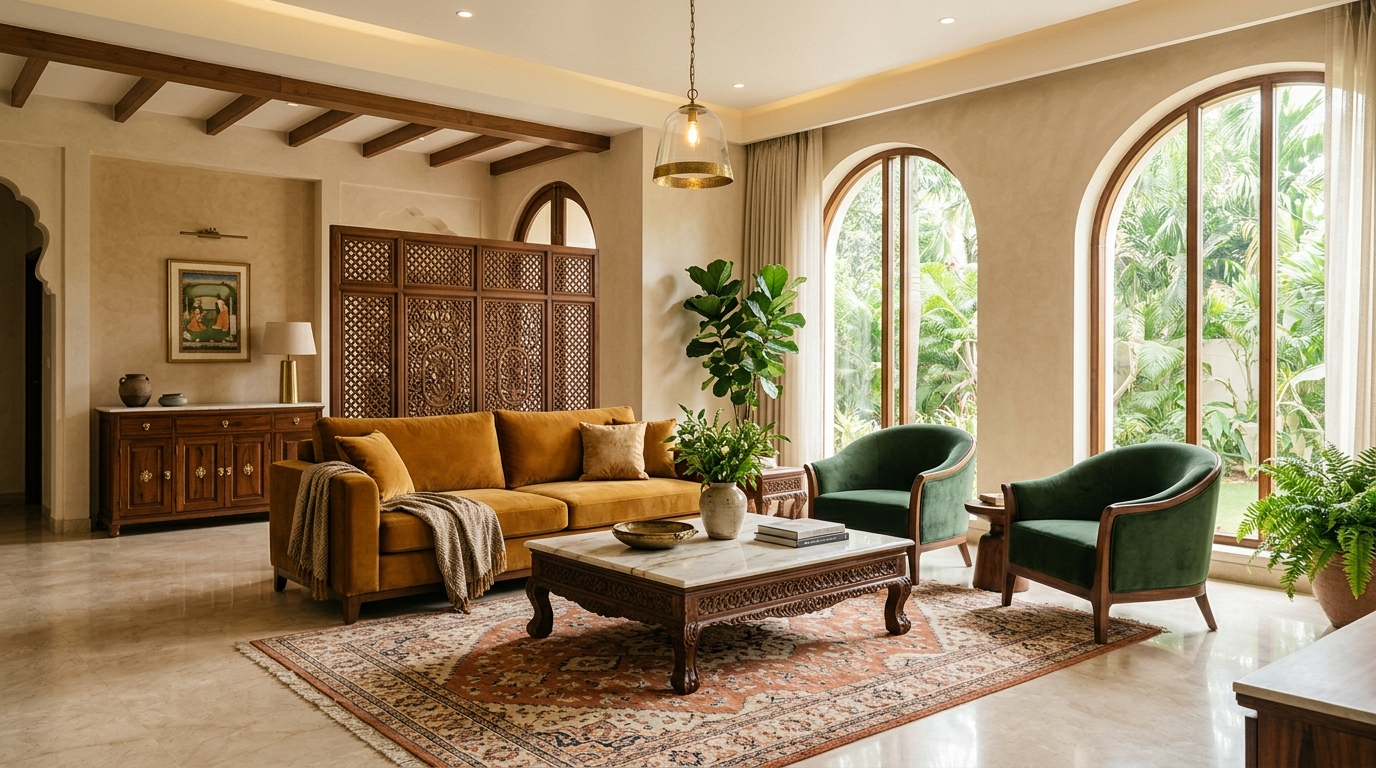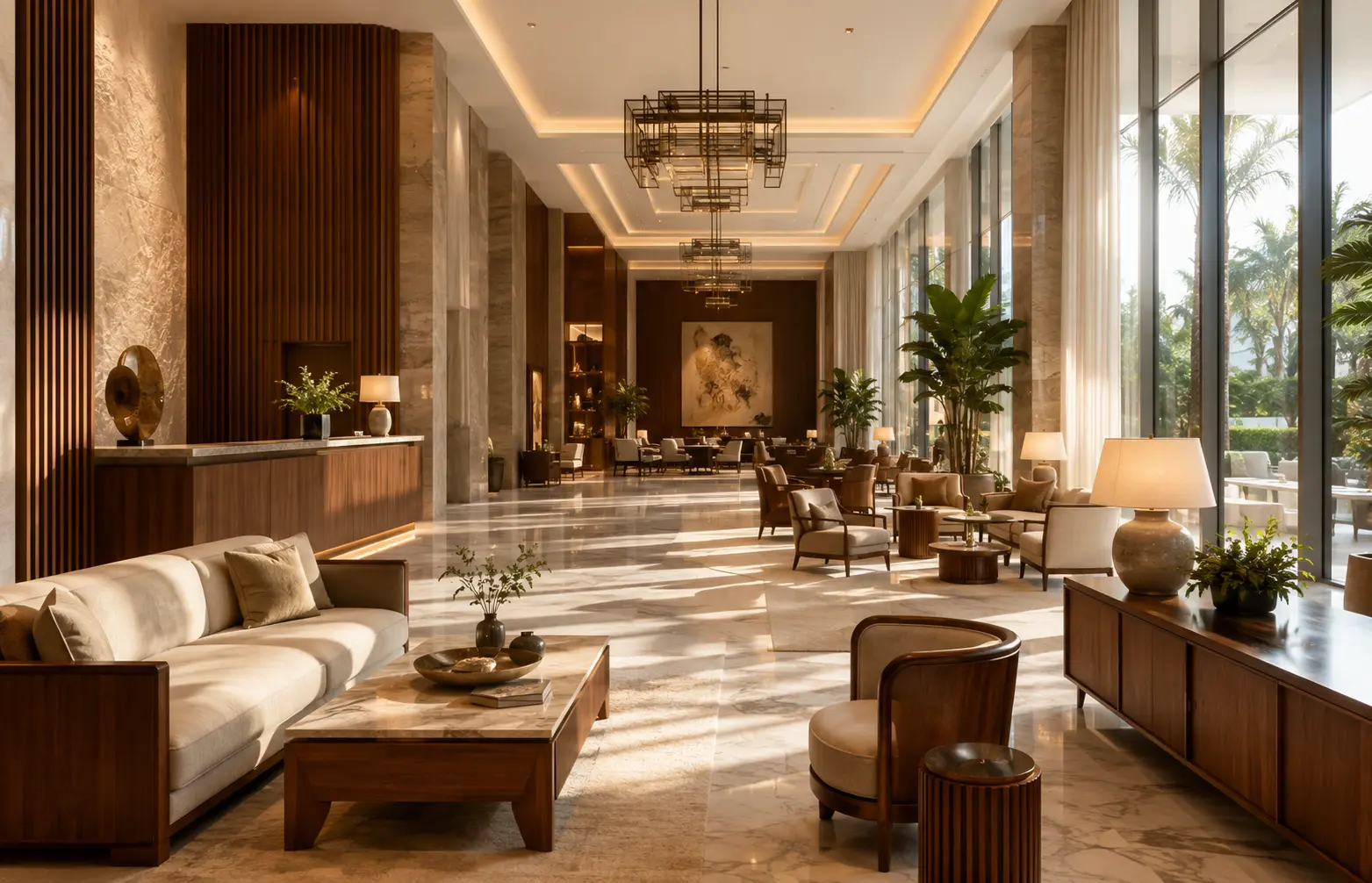

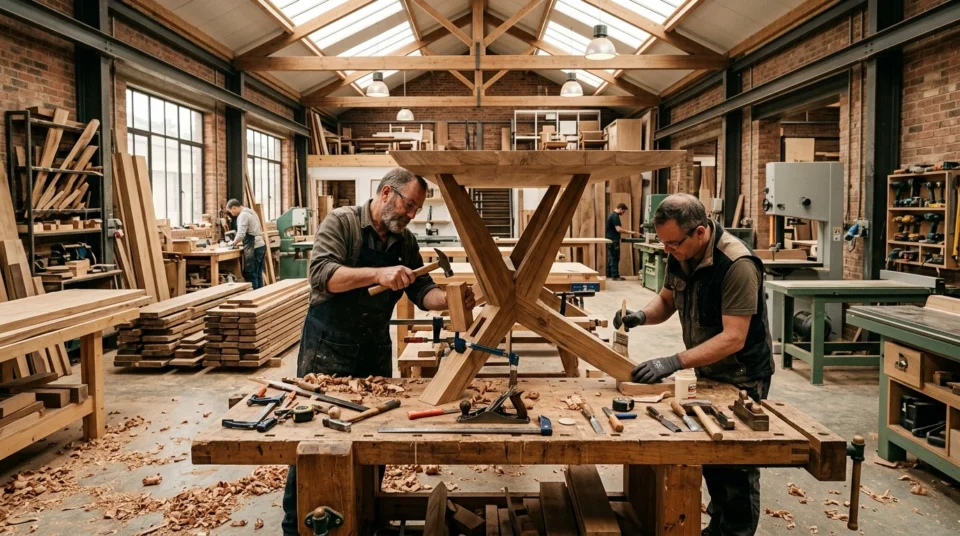
Finding the right furniture manufacturer is one of the most critical decisions in any residential, hospitality, or commercial development. Whether you are building a private luxury villa, renovating a boutique hotel, outfitting a restaurant chain, or coordinating multi-floor commercial workspaces, the physical quality of the furniture directly dictates the occupant experience, spatial longevity, and overall return on investment.
While retail showrooms cater to immediate single-piece purchases, large-scale projects and custom interior concepts demand a dedicated manufacturing partner. A reputable furniture manufacturing company does far more than assemble timber and foam; they translate architectural shop drawings into engineered reality, maintain stringent quality control across volume batches, and source certified raw materials that endure heavy everyday use.
However, navigating the manufacturing landscape requires clarity. With numerous workshops, suppliers, and wholesalers competing for contracts, how do you objectively distinguish between an authentic custom manufacturer and a catalogue reseller? This comprehensive guide outlines the operational structure of furniture manufacturing, examines key material considerations, and delivers a rigorous 12-point evaluation framework to help you choose the ideal manufacturing partner for your project.
What Is a Furniture Manufacturer?
In the commercial and residential procurement ecosystem, the terms manufacturer, supplier, wholesaler, and retailer are frequently used interchangeably. Understanding their operational differences is essential for establishing realistic budgets, customization expectations, and lead times.
Furniture Manufacturer
An enterprise that owns and operates production machinery, woodworking benches, metal fabrication bays, and upholstery lines. A manufacturer converts raw commodities—such as kiln-dried logs, metal profiles, high-resilience foam, and upholstery textiles—into finished furniture according to custom drawings or proprietary collections.
Furniture Supplier
A sourcing and distribution entity that procures furniture from a network of distinct factories. While a reputable furniture manufacturer and supplier may combine both manufacturing facilities and third-party sourcing, standard suppliers typically manage supply chain logistics rather than factory floor operations.
Furniture Wholesaler
A business that purchases standardized catalogue furniture in high container volumes to distribute to regional dealers and retail stores. Wholesalers focus on volume distribution with virtually zero capability for bespoke sizing, custom joinery, or material modifications.
Furniture Retailer
Consumer-facing storefronts and e-commerce platforms selling finished, pre-packaged inventory directly to end users. Retail pricing includes substantial showroom overheads, inventory holding costs, and brand marketing premiums.
| Entity Type | Core Production Role | Customization Scope | Primary Cost Factor |
|---|---|---|---|
|
Furniture Manufacturer |
Produces furniture directly from raw materials using dedicated machinery, workshops, and skilled craftsmen. |
Extensive (custom dimensions, materials, joinery, finishes, and bespoke drawings). |
Direct-from-source pricing without retail markups or multiple intermediary layers. |
|
Furniture Supplier |
Sources, aggregates, and delivers furniture from various production units or partner manufacturers. |
Moderate to limited (depends on their manufacturing network and agreements). |
Includes vendor handling fees and margin; convenient for unified multi-vendor billing. |
|
Furniture Wholesaler |
Buys mass-produced catalogue furniture in large container volumes to distribute to retail chains. |
Very low to none (standardized catalogue inventory with preset specifications). |
Low unit cost on high-volume standard units; no flexibility for architectural adaptations. |
|
Furniture Retailer / Showroom |
Displays finished inventory in physical showrooms or online stores for direct end-consumer purchase. |
Minimal (limited to predefined showroom fabric or finish swatches). |
Highest retail markup to cover commercial retail showroom overheads and display floor costs. |
What Does a Furniture Manufacturer Do?
A full-scale manufacturing facility oversees a complex lifecycle of technical and craftsmanship disciplines. Each phase plays a distinct role in ensuring structural integrity, ergonomic comfort, and visual refinement:
1. Product Design and Engineering
Translating architectural concepts and CAD blueprints into production-ready shop drawings. The manufacturing design team assesses joinery load distribution, cantilever stability, and ergonomic proportions before raw material cutting begins.
2. Material Sourcing and Seasoning
Procuring certified hardwoods, moisture-resistant engineered boards, stainless steel extrusions, natural stone slabs, and high-performance textiles. Solid timbers undergo kiln drying to achieve optimal moisture content (8%–12%) to prevent warping or splitting.
3. Precision Manufacturing and Joinery
Executing frame cutting, mortise-and-tenon joinery, dowelling, and CNC routing. High-end wood furniture manufacturing integrates traditional woodworking techniques with modern computer-controlled precision.
4. Structural Upholstery and Tailoring
Layering multi-density high-resilience (HR) foams, pocket springs, elastic webbing, and Dacron wraps. Master upholsterers pattern, cut, stitch, and hand-tailor genuine leathers and fabrics with aligned piping and reinforced seams.
5. Surface Finishing and Polishing
Applying multi-stage surface treatments including natural wood stains, open-pore polyurethanes, matte lacquer topcoats, Italian polyester high-gloss polishes, and PVD metal coatings to deliver long-term protection against stains and scratches.
6. Quality Inspection Protocols
Conducting dry-fit tests, checking alignment of drawers and concealed soft-close runners, testing structural stability under weight, and verifying color uniformity across all production batches.
7. Export-Grade Packaging and Logistics
Wrapping products in multi-layered protective materials—including bubble wraps, corner edge guards, high-density foam sheets, and custom wooden crating—to prevent any transit damage across domestic and international shipping routes.
Benefits of Working With a Furniture Manufacturer
Partnering directly with a manufacturing facility unlocks substantial strategic, financial, and operational advantages over third-party retail sourcing:
Complete Customization Scope
You are never limited by fixed catalogue dimensions. A dedicated custom furniture manufacturer can adjust seating depths, modify table heights, build curved modular sectional sofas, and accommodate unusual structural room columns.
Direct Material and Quality Control
Direct access allows you to inspect the internal timber species, foam densities (32D to 45D HR foam), and metal wall thickness rather than relying on ambiguous retail product tags.
Cost Efficiency on Bulk Production
By removing retail margins, distributor markups, and middleman commissions, buyers achieve superior material specifications for the same budget, particularly for multi-room hotel or corporate fits.
Streamlined Project Coordination
Dealing with a single production source simplifies project management. You coordinate drawings, finishes, site measurements, and delivery milestones through one dedicated technical account manager.
Types of Furniture Manufacturers
Furniture factories vary significantly based on their machinery, craftsmanship specialization, and target sectors. Selecting the appropriate category ensures your project requirements align with the factory’s core strengths:
Residential & Luxury Furniture Manufacturers
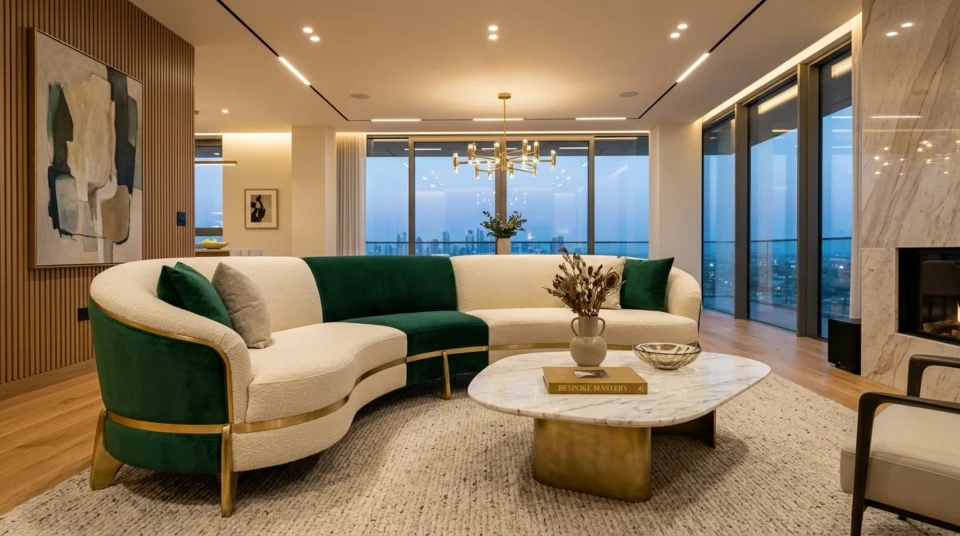
Specializing in high-touch, artisan-crafted pieces for private apartments, penthouses, and luxury residences. A luxury furniture manufacturer emphasizes rare natural veneers, exotic hardwoods, Italian leathers, hand-carved accents, and refined bespoke detailing.
Custom Furniture Manufacturers
Agile workshops configured for made-to-order projects. Custom furniture manufacturers specialize in translating unique architect blueprints into bespoke one-off pieces or boutique batch runs without requiring massive minimum order quantities.
Hotel & Hospitality Furniture Manufacturers
A specialized hotel furniture manufacturer engineers contract-grade furniture capable of enduring heavy guest turnover. Products include integrated headboard walls, luggage benches, desk consoles, and fire-retardant lounge seating.
Restaurant & Café Furniture Manufacturers
Focused on high-traffic dining applications. These producers prioritize stain-resistant table surfaces, durable powder-coated steel chair bases, compact ergonomic footprints, and easily cleanable commercial upholstery fabrics.
Commercial & Office Furniture Manufacturers
A commercial furniture manufacturer produces large-volume modular workstations, executive conference tables, reception pods, and collaborative soft-seating systems with integrated cable management.
Outdoor Furniture Manufacturers
Focusing exclusively on weather-resilient materials such as Grade-A teak, powder-coated aluminum frames, synthetic wicker weaves, UV-stabilized ropes, and quick-dry reticulated foam cushions.
Evaluation Protocol
How to Choose the Right Furniture Manufacturer for Your Project
Evaluating a prospective manufacturing partner requires structured scrutiny. Use this 12-point evaluation framework to assess production capability, reliability, and technical competence before issuing a purchase order.
1. Manufacturing Experience and Track Record
Evaluation Focus: Industry longevity, mastery across different woodworking and metalworking disciplines, and real-world execution expertise.
Look beyond simple marketing claims and assess the depth of the manufacturer’s workshop experience. A seasoned manufacturing team understands structural joinery, wood seasoning, foam densities, and structural reinforcement necessary to keep furniture functional across years of use.
2. Product Range and Multi-Material Versatility
Evaluation Focus: Ability to handle integrated materials under one roof or through tightly managed production cells.
Modern architectural furniture rarely relies on a single medium. The best manufacturers seamlessly fabricate wooden frames, precision metal bases, stone tops, and complex upholstery without forcing you to manage separate vendors for each component.
3. Customization Capabilities
Evaluation Focus: Flexibility to build to exact shop drawings, custom sizing, tailor-made silhouettes, and bespoke details.
Every architectural space has unique spatial boundaries. A true custom manufacturer accommodates millimetre-level sizing adjustments, custom router profiles, bespoke headboard heights, and custom stain matching to align with designer specifications.
4. Material Quality and Sourcing Integrity
Evaluation Focus: Kiln-dried hardwoods, certified engineered cores, high-grade hardware, and commercial-grade textiles.
Material integrity dictates longevity. Inquire about the moisture content of solid timber (ideally 8%–12% for kiln-dried wood), the grades of commercial hardware (such as soft-close runners and hinges), and the rub count (Martindale cycles) of upholstery fabrics.
5. Manufacturing Capacity and Scalability
Evaluation Focus: Balancing artisan craftsmanship with the capacity to meet project schedules without bottlenecking.
Whether you need a single bespoke dining table for a private villa or 120 room sets for a boutique resort, the manufacturer must possess the machine infrastructure and bench capacity to deliver consistent quality across the entire batch.
6. Quality Control (QC) Protocols
Evaluation Focus: Multi-stage inspection from raw timber selection to pre-dispatch assembly checks.
A disciplined manufacturer implements inspection checkpoints at frame assembly, dry-fitting, sanding, finishing/staining, upholstery stitching, and final hardware installation. This prevents defective units from ever reaching the delivery truck.
7. In-House Design and Technical Support
Evaluation Focus: Shop drawing translation, structural value engineering, and CAD/3D drafting support.
Interior designers and architects benefit immensely when a manufacturer’s drafting team can review concepts for structural feasibility, suggest cost-effective joinery improvements, and provide detailed production shop drawings for client sign-off.
8. Production Timelines and Scheduling Transparency
Evaluation Focus: Realistic lead times, milestone reporting, and dependable project handover commitments.
Delays in furniture delivery stall site handovers and grand openings. Evaluate whether the manufacturer provides realistic production schedules with clear milestone updates (framing, polish, upholstery, packaging) throughout the fabrication cycle.
9. Packaging, Transit Protection, and Logistics
Evaluation Focus: Multi-layer protective wrapping, edge guards, corner padding, and crating for delicate finishes.
Exquisite craftsmanship can be ruined in minutes by inadequate packaging during transit. Inspect the manufacturer’s packing standards, including high-density foam wrapping, corrugated corner protectors, wooden skeleton crates, and waterproof pallet wrapping.
10. Previous Project Portfolio and References
Evaluation Focus: Verifiable project photos, completed commercial/residential installations, and client references.
Examine detailed photos of completed installations rather than 3D digital renderings. Real workshop photographs and completed site imagery demonstrate actual finish quality, edge banding, seam alignments, and material handling.
11. Transparent Pricing and Structured Quotations
Evaluation Focus: Itemized bills of quantities (BOQ), material specifications, and clear payment terms without hidden surcharges.
Trustworthy manufacturers provide clear, line-item quotations detailing timber grades, finish types, hardware models, packaging fees, and applicable taxes. This transparency prevents unexpected cost escalations halfway through the manufacturing run.
12. Dedicated Communication and Post-Handover Support
Evaluation Focus: Single point of contact, responsive account management, and reliable warranty support.
A collaborative manufacturing partnership relies on fluid communication. Having a designated project manager who understands technical drawing revisions, coordinates site dimensions, and remains available for after-sales support ensures a stress-free experience.
Why Custom Furniture Manufacturing Matters
Ready-made mass-market furniture relies on standardized production templates designed for the average room. However, contemporary architectural projects demand bespoke spatial harmonization. Choosing a specialized custom furniture manufacturer gives designers and developers complete control across several critical parameters:
Spatial Dimensions
Customized widths, heights, and depths tailored exactly to floor plan contours, window sill heights, and wall alcoves.
Wood Species & Grain
Freedom to select certified solid teak, American walnut, white oak, or ash with book-matched or slip-matched veneer layouts.
Performance Fabrics
Selection of high-Martindale rub count bouclés, linens, velvets, or top-grain leathers with customized stain-repellent coatings.
Specialized Finishes
Custom color matching, natural matte oil finishes, satin polyurethanes, brushed brass electroplating, or antiqued metal patinas.
Hardware Integration
Concealed soft-close German drawer runners, push-to-open hinges, custom brass knurled handles, and cable management ports.
Ergonomic Tailoring
Custom seat depths, lumbar incline angles, and multi-layered cushioning configurations adapted to specific user preferences.
Furniture Manufacturing for Hotels, Villas, Restaurants and Commercial Projects
Different commercial sectors possess distinct operational pressures. A proficient furniture manufacturer in India understands how to adapt manufacturing specifications for specific project environments:
Hotel Furniture Manufacturing
In the hospitality domain, furniture is subjected to constant, rigorous guest usage. A dedicated hotel furniture manufacturer incorporates reinforced joinery, scratch-resistant polyurethane finishes, and moisture-resistant substrates for guestroom headboard panels, luggage racks, and minibar cabinetry.
Key hospitality requirements include fire-retardant (FR) foam and upholstery compliant with commercial safety codes, easily replaceable component parts, and rapid batch replication across hundreds of standardized guestrooms.
Villa Furniture Manufacturing
Luxury villas and expansive private estates require grand-scale statement pieces that command high-ceiling living spaces. Villa furniture manufacturing focuses on monumental live-edge or book-matched solid wood dining tables, sculptural lounge seating, bespoke master walk-in wardrobe systems, and seamlessly integrated indoor-outdoor transition lounges.
Craftsmanship in this sector prioritizes organic character, rare natural stone slabs (such as Italian marble and quartzite), and artisan hand-finishing that creates an atmosphere of timeless sophistication.
Café and Restaurant Furniture Manufacturing
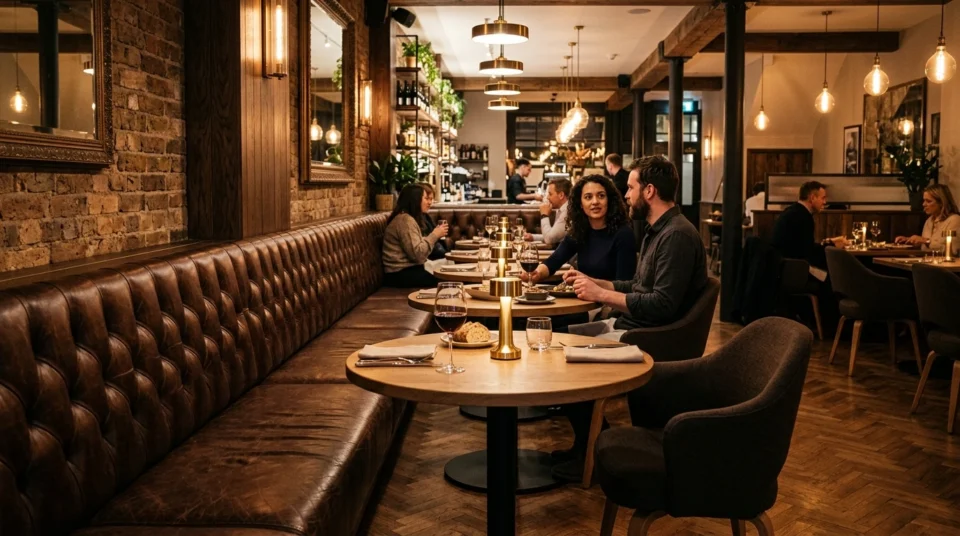
Food and beverage spaces require furniture engineered for extreme turnover, frequent sanitization, and heavy impact. Restaurant banquettes, dining chairs, and barstools require reinforced mortise-and-tenon corner blocks and stain-resistant performance fabrics with 50,000+ Martindale rub counts.
Table bases must provide heavy-gauge stability without obstructing diner legroom, while table tops must withstand hot plates, acidic beverage spills, and daily chemical cleaning agents.
Commercial and Workspace Furniture Manufacturing
A specialized commercial furniture manufacturer produces modular systems designed for corporate offices, co-working spaces, and institutions. Priorities focus on ergonomic compliance, acoustic privacy panelling, integrated power/data conduits, and high-density laminate or veneer durability.
Modularity allows organizations to reconfigure desk layouts easily as team sizes evolve, making engineering precision and batch consistency essential.
What Materials Should You Consider?
No single furniture material is universally superior for every application. The ideal material choice depends on the specific project context—taking into account structural loading, environmental exposure, user turnover, maintenance capabilities, and budgetary parameters.
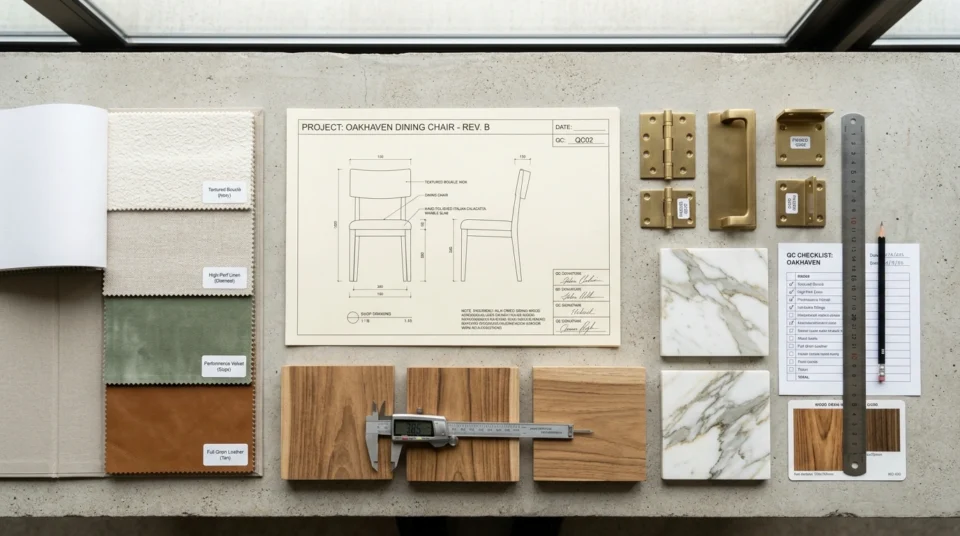
Solid Wood (Teak, Walnut, Oak, Ash, Mahogany)
Recommended Application:
Dining tables, statement chairs, bed frames, credenzas, and luxury bespoke residential/villa pieces.
Key Strengths:
Natural grain beauty, exceptional structural longevity, can be sanded and refinished multiple times, high load-bearing capacity.
Engineering Notes:
Requires proper kiln-drying to prevent warping; sensitive to extreme humidity fluctuations; higher initial investment.
Engineered Wood (Commercial Plywood, HDHMR, MDF with Wood Veneers)
Recommended Application:
Wardrobes, hotel room casegoods, wall panelling, media consoles, and commercial office cabinetry.
Key Strengths:
Dimensional stability, uniform density, resistant to warping, cost-effective for large flat surfaces, excellent substrate for exotic natural veneers.
Engineering Notes:
Edge finishing requires precise edge-banding or solid wood lipping; lower moisture tolerance if unsealed.
Metal (Stainless Steel, Brass, Powder-Coated Mild Steel, Cast Iron)
Recommended Application:
Dining table bases, chair legs, occasional tables, café seating frames, and architectural partitions.
Key Strengths:
Slender structural profiles, high tensile strength, modern industrial/contemporary aesthetic, durable PVD and powder-coated finishes.
Engineering Notes:
Requires quality welding, seam grinding, and electroplating or rust-resistant coatings for longevity.
Natural Stone & Marble (Carrara, Travertine, Granite, Quartzite)
Recommended Application:
Luxury dining tops, coffee table surfaces, vanity counters, and reception desk focal points.
Key Strengths:
Timeless organic patterns, heat resistance, unmatched sense of luxury and architectural weight.
Engineering Notes:
Porous natural stones require regular sealing against staining and acid etching; heavy weight requires reinforced substructures.
Glass (Tempered, Fluted, Smoked, Frosted)
Recommended Application:
Cabinet door inserts, tabletop overlays, contemporary shelving, and accent side tables.
Key Strengths:
Visual lightness, creates open spatial feel, impervious to liquids and staining, easy to sanitize.
Engineering Notes:
Susceptible to smudges and scratches; must use toughened safety glass with polished, bevelled edges.
Genuine Leather & Top-Grain Hide
Recommended Application:
Executive lounge chairs, luxury sofas, headboards, and high-end residential seating.
Key Strengths:
Develops an attractive natural patina over time, breathable, highly durable, luxurious tactile feel.
Engineering Notes:
Higher cost; requires periodic conditioning; natural variations and markings across hides.
Performance & Commercial Fabric (Bouclé, Velvet, Linen-Blends, High-Martindale Polyester)
Recommended Application:
Hotel guestroom seating, restaurant banquettes, high-traffic living room sofas, and dining chairs.
Key Strengths:
Huge variety of textures and colors, stain-resistant coatings available, fire-retardant (FR) treatments, high rub counts (50,000+ Martindale).
Engineering Notes:
Must be matched carefully to room lighting and expected wear levels; fabric backing required for clean tailoring.
Questions to Ask a Furniture Manufacturer Before Ordering
Before issuing an advance payment or finalizing a production contract, ask prospective manufacturers these critical technical and logistical questions:
1. Material & Timber Questions
What is the certified moisture percentage of your solid wood? Where is your timber sourced, and what grade of plywood or core board is used inside veneered and upholstered units?
2. Prototyping & Approval Process
Do you provide physical finish swatches (wood stains, metal coatings, fabric samples) for designer sign-off? Can a prototype unit or mock-up room be fabricated for review before mass manufacturing commences?
3. Quality Inspection Access
Are we (or our appointed project architect) permitted to inspect raw frames and joinery at your workshop prior to final upholstery and polishing?
4. Lead Times & Milestone Tracking
What is the guaranteed production timeframe from approved shop drawings to dispatch? How frequently will milestone photo/video updates be shared?
5. Packaging, Transit & Warranty
What specific protective packaging materials are standard? Who is responsible for freight coordination, and what is your protocol for handling any transit damage or manufacturing defects?
Lorem ipsum dolor sit amet, consectetur adipiscing elit. Ut elit tellus, luctus nec ullamcorper mattis, pulvinar dapibus leo.
Manufacturing Partner
Why Choose Zaioraa as Your Furniture Manufacturing Partner?
At Zaioraa, we specialize in delivering bespoke and project-driven furniture solutions across residential, hospitality, villa, café, restaurant, and commercial developments. We bridge architectural design intent with rigorous manufacturing precision.
Custom & Luxury Furniture
Tailor-made dimensions, curated hardwood species, premium leathers, and bespoke finishes built precisely to architectural specifications.
Hospitality & Hotel Furniture
Contract-grade guestroom casegoods, lounge seating, and lobby focal units engineered for high traffic and aesthetic refinement.
Villa & Estate Furniture
Large-scale statement dining sets, luxury living modulars, and custom credenzas celebrating natural stone, metal, and wood.
Café & Restaurant Furniture
Durable dining chairs, custom banquette seating, and robust table systems tailored for commercial food service environments.
Dedicated technical drafting, material customisation, and reliable project coordination for architects, designers, and developers.
Final Thoughts
Selecting a furniture manufacturer is fundamentally an investment in your project’s longevity, design integrity, and execution peace of mind. While price per unit is an important consideration, the true value of a manufacturing partnership lies in structural craftsmanship, dependable lead times, material authenticity, and responsive technical communication.
By prioritizing manufacturers with transparent quality control protocols, verifiable previous project portfolios, and versatile multi-material capabilities, you ensure that every piece delivered to your site meets the highest standards of architectural excellence.
Blog
Get fresh home inspiration and helpful tips from our interior designers